
Buying a flat usually means financing part of the cost through a home loan for flats. If you’re planning on buying flats in Trichy, understanding the home loan process early helps you set a realistic budget, prepare the right documents, and avoid last-minute delays.
Lenders assess two things: you and the property. Your income, credit history, existing EMIs and age matter on one side. On the other, they look at the property’s title, approvals, sanctioned plans and RERA details.
This guide walks through the key steps in the home loan process — from checking eligibility and calculating EMI to document verification and disbursement, so you know what to expect at every stage of buying flats in Trichy.
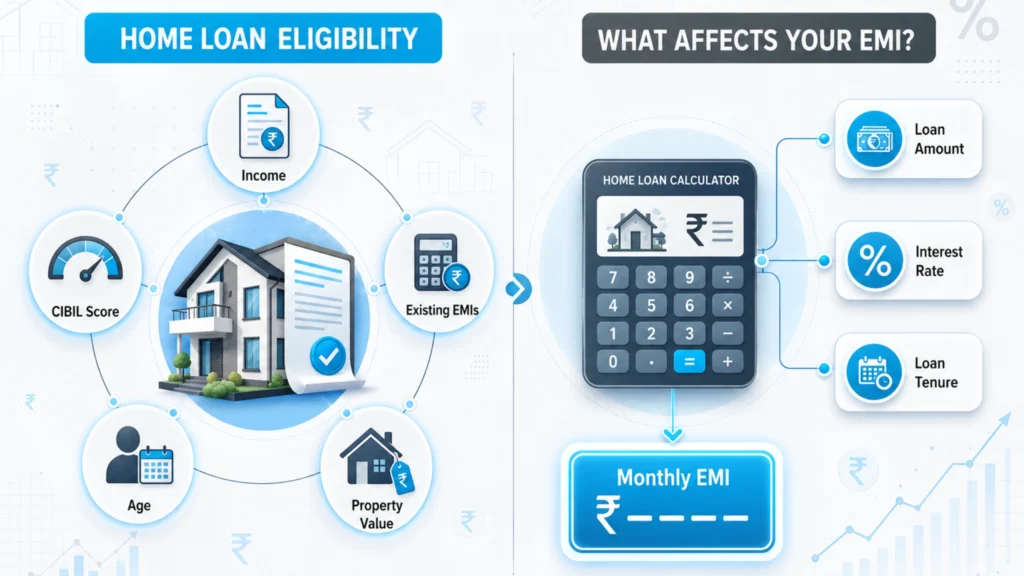
Before shortlisting a flat, it helps to know how much you can realistically borrow. Lenders typically look at:
For example, if a flat costs ₹60 lakh and the lender approves ₹45 lakh, you’ll need to arrange the remaining ₹15 lakh yourself, plus other purchase costs.
Eligibility rules differ across banks and NBFCs, so getting a pre-approval or eligibility check early gives you a clearer sense of your actual budget.
Requirements vary by lender, but most ask for proof of identity, income and property ownership.
Personal documents
Income documents
Property documents
Manoo Housing Promoters provides project-approved documentation upfront for eligible projects, which helps speed up verification for both buyers and lenders during the home loan process.
EMI (Equated Monthly Instalment) is what you repay each month toward your home loan. It depends on three things:
A longer tenure lowers your monthly EMI but raises the total interest you pay over time. A higher interest rate increases the overall cost either way.
Example: A ₹40 lakh loan at 8% interest over 20 years works out to an EMI of roughly ₹33,458 per month.
Fixed vs Floating Interest Rates
A fixed rate stays the same for the agreed period, giving you predictable repayments. A floating rate moves with the lender’s benchmark rate, so your EMI can go up or down over the loan term.
Before signing, compare the interest rate, EMI, total interest payable, processing charges and other fees across lenders.
Use the Manoo Housing Promoters Loan Calculator to estimate your monthly EMI.
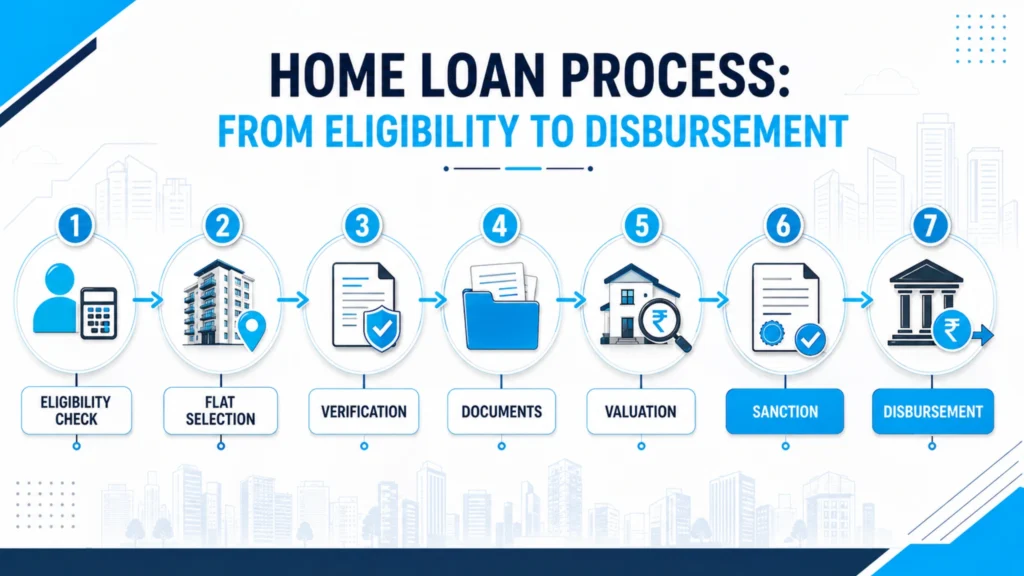
Whether you’re taking a home loan for buying flats in a new project or a resale unit, the exact sequence varies slightly by lender, but generally looks like this:
A builder-bank tie-up means the developer has an existing relationship with a lender for financing buyers of that project. This can make things easier because the lender is already familiar with the project’s paperwork, which often means fewer back-and-forth queries between buyer, developer and bank.
That said, a tie-up isn’t a guarantee of approval. Your income, credit history and repayment capacity still decide the outcome.
If you have a preferred bank outside the tie-up list, the Manoo Housing Promoters team can guide you on the documents needed to process your loan through that lender.
PMAY-U 2.0 The Pradhan Mantri Awas Yojana – Urban 2.0 is currently active. Eligibility and benefit amounts depend on the specific scheme component and your individual circumstances, so check the latest official criteria before assuming you qualify.
Home Loan Tax Benefits Under the old tax regime, eligible taxpayers may claim deductions on home loan interest under Section 24(b), and on qualifying principal repayment under Section 80C, within its overall limit. Treatment differs under the new tax regime, so confirm your specific case with a qualified tax professional.
A home loan is easiest to manage when you plan it alongside your property search — check eligibility, work out your down payment, compare lenders, and pick an EMI that fits your monthly budget without stretching it. Getting the home loan process right from the start makes the rest of buying flats in Trichy far less stressful.
If you’re exploring options for buying flats in Trichy, Manoo Housing Promoters can help with project documentation and guide you through a home loan for buying flats, end to end.
On floating-rate loans, most banks and NBFCs don’t charge prepayment or foreclosure fees for individual borrowers, as per RBI guidelines. Fixed-rate loans may still attract charges. Check your loan agreement for specifics.
Yes, in most cases. Adding a co-applicant with a steady income, such as a spouse or parent, combines both incomes for eligibility purposes, which can increase the loan amount you qualify for.
Processing fees typically range from around 0.5% to 1% of the loan amount, though this varies by lender and sometimes by loan scheme. Always ask for the exact figure in writing before applying.
Yes, most banks offer home loans to NRIs, though the eligibility criteria, documentation and income assessment differ from resident applicants. It’s worth checking with the specific lender for their NRI loan terms.
Tenure is usually capped at 30 years, but it also depends on your age at the time of application. Most lenders require the loan to be fully repaid before you reach a certain retirement age, commonly 60 to 70 years.
A home loan for flats is available for resale properties as well, provided the property has clear title documents and meets the lender’s technical and legal checks. The process is largely similar to financing a new flat.
You can ask the lender for the specific reason. Often, it’s linked to credit score, income mismatch or property document issues. You can address the gap and reapply, or approach a different lender with terms that better match your profile.
Yes, this is called a balance transfer. If another lender offers a meaningfully lower rate, you can shift your outstanding loan to them, though it usually involves some processing charges and fresh paperwork.
It isn’t legally mandatory, but many lenders recommend or bundle a loan protection insurance plan that covers the outstanding amount in case of the borrower’s death or disability. Read the terms carefully, as it’s usually optional and sometimes added by default.
A larger down payment lowers your Loan-to-Value ratio, which can occasionally help you negotiate a slightly better rate or terms, though it’s not guaranteed. It reliably reduces your total interest outgo and monthly EMI, regardless of rate changes.
This article is for general information only and doesn’t constitute financial or tax advice. Loan terms, eligibility and scheme benefits vary by lender and individual circumstances — please verify current details with your bank, NBFC or a qualified tax professional before making a decision.